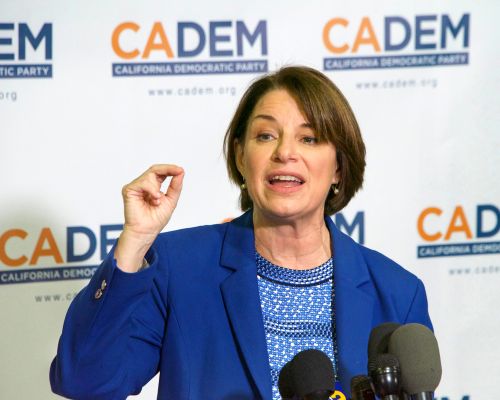
Sen. Amy Klobuchar won the Minnesota Democratic gubernatorial primary on August 13 with 89.1% of the vote. That's not an election. That's a coronation with a ballot scanner.
The $9 billion question is whether anyone in the state noticed what they were actually voting to inherit.
Klobuchar, who has represented Minnesota in the U.S. Senate since 2007 and ran for the Democratic presidential nomination in 2020, is now positioned to replace outgoing Gov. Tim Walz. And she'll be stepping into a governor's mansion still echoing with one of the largest fraud scandals in American history — a $9 billion COVID-era childcare funding scheme that federal prosecutors are still unraveling.
The fraud, which ran through Minnesota's state social services and Medicaid programs, happened on Klobuchar and Walz's watch. Walz testified before the House Oversight and Government Reform Committee about it on March 4, 2026. Klobuchar, for her part, has acknowledged the damage. "You are right to be angry about the fraud," she told voters during her May 2026 policy rollout. "It is unacceptable and it must end."
She also offered this: "I obviously am going to do things differently than Gov. Walz."
Differently. Not the most ringing indictment of a $9 billion theft that happened under your own party's governance, but we work with what we're given.
On the Republican side, Minnesota House Speaker Lisa Demuth won the primary with 45.1% of the vote, beating MyPillow founder Mike Lindell, who had Trump's endorsement and pulled 31.0%.
Demuth wasted no time drawing the line for November. "Amy Klobuchar, as a governor, would just be... 2.0. Tim Walz," she told supporters. "Tonight, Minnesotans made it clear they are ready for real change, at the top." She added: "When you look at her voting record and who she supported, she is not good for Minnesota going forward."
That framing is the whole general election in a sentence. Klobuchar spent 15 years voting alongside the same party apparatus that let $9 billion walk out the door, and now she's asking those same voters to trust her with the state checkbook. Republicans haven't held the Minnesota governor's office since Tim Pawlenty left in January 2011 — a 15-year drought. The fraud scandal is the first real crack in that wall.
Klobuchar's 89.1% primary number looks dominant until you remember what it actually means: she ran effectively unopposed. No serious Democrat challenged her. No one in the party thought it was worth asking whether the senator who watched from Washington while $9 billion evaporated from state programs might not be the ideal candidate to restore public trust.
The general election will come down to whether Minnesota voters treat the fraud as Walz's fault or the Democratic Party's fault. Klobuchar is betting she can draw a line between herself and the governor. Demuth is betting voters can do basic math — same party, same statehouse, same $9 billion hole in the budget.