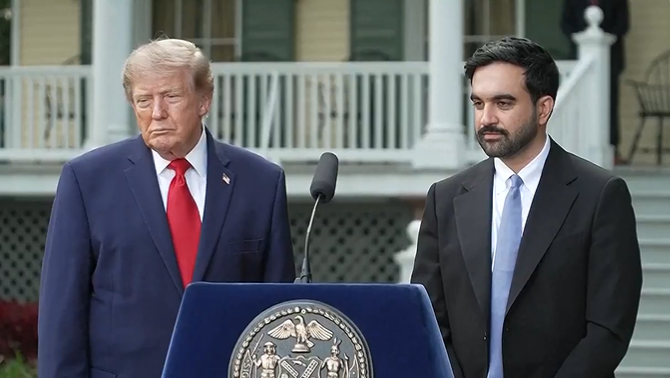
New York City Mayor Zohran Mamdani invited President Donald Trump to Gracie Mansion on September 21st for their third in-person meeting. They talked about a $21 billion affordable housing development in Queens. The press corps showed up too — and spent the entire time asking Mamdani why he was being so nice to the President.
Not why the housing project matters. Not what the $21 billion price tag covers. Why the Democrat was smiling.
One reporter opened with this: "There aren't too many Democrats who would roll out the red carpet for Donald Trump. You did that today." Another asked whether Mamdani "should be criticized for taking time to meet with the president." A third tried a different angle: "I think a lot of people see your strategy around the president as curbing your criticism of him... Do you still think this tactic is worth it?"
Three questions. Zero about housing. Zero about the actual governance happening ten feet away from them.
Mamdani's answer was the kind of thing that used to be unremarkable in American politics. He said he'd "meet with anyone, work with anyone who could deliver for New Yorkers." The subject on the table was Sunnyside Yard, a massive development site in Queens that Trump said he's "been watching for 35 years." Trump noted he'd "done a lot of low-income and moderate-income housing over the years" — a detail the press pool didn't follow up on, presumably because it didn't fit the narrative they'd already written in the van on the way over.
The Sunnyside Yard project carries an estimated price tag of $21 billion. It's the kind of infrastructure play that requires federal cooperation regardless of who occupies the White House. Mamdani apparently understands this. The reporters covering him apparently don't.
Trump, for his part, kept things pragmatic. "If I had the choice of him being a bad mayor or a horrible mayor, I don't want that," Trump said. "I want him to be a great mayor." That's a sitting Republican president publicly rooting for a Democratic mayor to succeed. The press treated it like a hostage situation.
This isn't even the first time Mamdani's cooperation with Trump produced results. After a previous meeting between the two, a Columbia University student was released from ICE custody within hours. You'd think that outcome — a constituent helped, a problem solved — would earn Mamdani credit with his own side. Instead it earned him a roomful of journalists asking if he regretted the whole thing.
The real tell was a moment near the end. The press squawked about Trump denying a few media outlets a room at the White House. They tried to get Mamdani to go off on the President over it, the mayor refused. Mamdani said "we are going to have all the members of the press here on the lawn." Trump grinned. "It's interesting because they said they were going to boycott me, but they'll never boycott me," he said. "Look at all that press."
He's not wrong. The same outlets that barred themselves from the White House briefing room over access disputes couldn't resist showing up at Gracie Mansion to scold a Democrat for doing his job. The boycott lasted right up until there was a Democrat to shame.
The coverage template was obvious before anyone filed a story: Democrat meets with Trump, therefore Democrat is compromised. It's a framing that only works if you believe governance is supposed to stop at party lines — that a mayor should let a $21 billion project stall because the president has the wrong letter next to his name.
Mamdani didn't take the bait. Trump didn't either. They talked about housing, shook hands, and let the cameras roll.