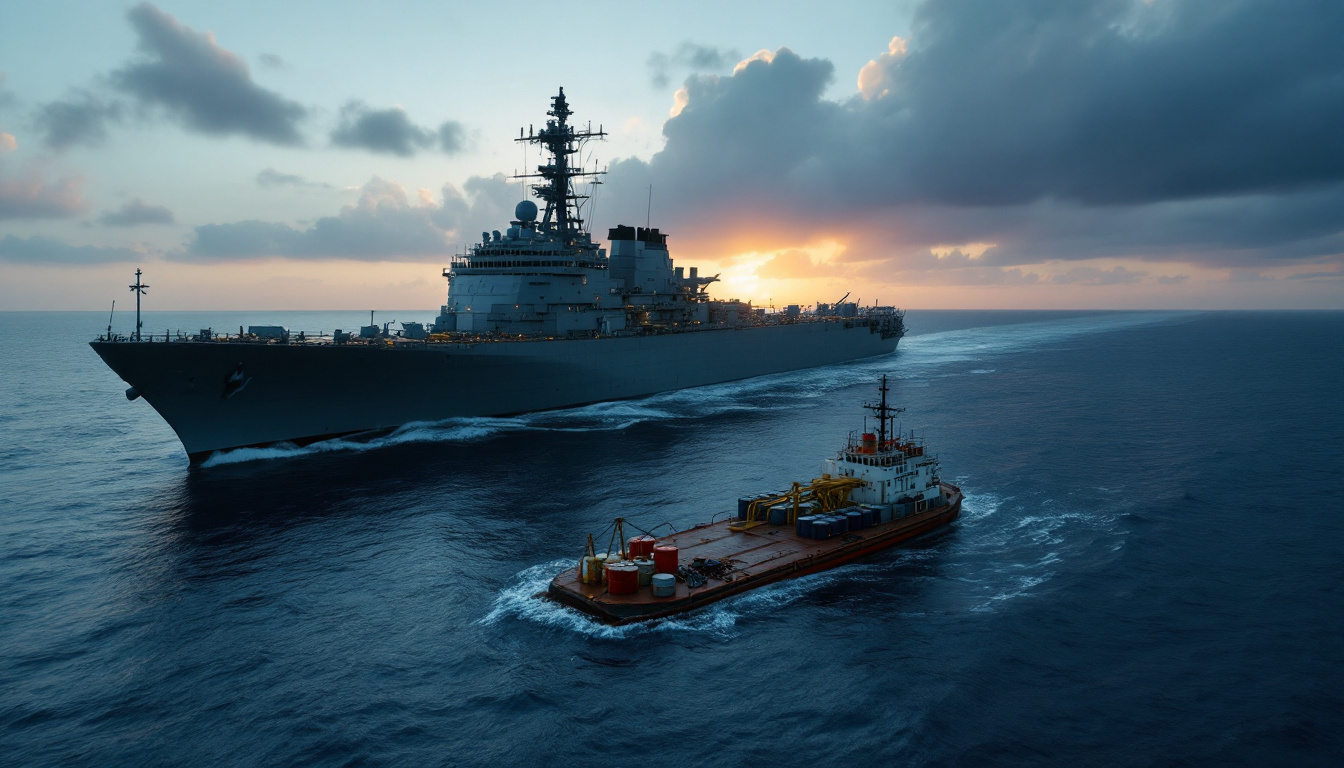
On August 28, the USS San Antonio launched an operation in the Eastern Pacific Ocean against a floating refueling station — a literal gas station bobbing in the open water — built by narco-terrorists to top off drug-running vessels on their way to American shores.
They boarded it, cleared the crew, and sank the hull.
The target belonged to Los Choneros, an Ecuadorian narco-terrorist organization that was designated a foreign terrorist organization back in September 2025. Joint Task Force Western Hemisphere, operating under U.S. Southern Command, coordinated the strike alongside Ecuadorian government partners and the Colombian Navy. The crew members were relocated to Ecuador. The floating depot went to the ocean floor.
Gen. Francis L. Donovan, SOUTHCOM Commander, didn't mince words about the operation. "Today's operation is a stark example of the Americas Counter Cartel Coalition's power to dismantle the sophisticated, clandestine narco-terrorist tactics and capabilities that have enabled the trafficking of dangerous drugs destined for American communities," Donovan said.
He followed that up with a second statement: "Working together with our Ecuadorian partners, our coalition dealt a decisive blow to a narco-terrorist operation responsible for moving significant amounts of drugs through the region."
This is what military cooperation actually looks like. Not joint communiqués about "shared values" or photo ops at NATO summits. Ecuador said yes, Colombia said yes, and the U.S. Navy said "we'll handle the sinking part."
SOUTHCOM's official statement put an even finer point on it: "Make no mistake: We are taking the fight to the narco-terrorists to end their terror and violence in the Western Hemisphere and protect the homeland."
The operation falls under what the administration has called the "Donroe Doctrine" — a policy framework built around the idea that the Western Hemisphere is America's backyard, and drug trafficking networks operating in it are a direct threat to American sovereignty. Not a "challenge." Not a "concern." A threat, treated like one.
The floating fuel depot wasn't some rusted barrel lashed to a raft. It was a purpose-built logistical node in a cartel supply chain — the kind of infrastructure that lets drug-running vessels operate far from shore without needing to return to port. Take it out and the math changes. Range shrinks. Costs go up. Schedules break.
For years we heard about the drug war as something that required "comprehensive reform" and "addressing root causes" and seventeen other phrases that meant "do nothing while looking busy." This is the alternative. Find the infrastructure. Board it. Sink it.
The military used to do these things routinely, and then we spent a decade asking it to focus on pronouns and climate resilience assessments. Turns out the boats still float and the sailors still know how to put things on the ocean floor when you let them.
Four out of five drug dealers arrested in Portland weren't even supposed to be in the country. The fentanyl pipeline runs from foreign soil through foreign operatives to American streets. Sinking one floating gas station doesn't end it. But it's the kind of operation that makes the next shipment harder, slower, and more expensive.
That used to be called deterrence. Apparently it still works when someone remembers to use it.