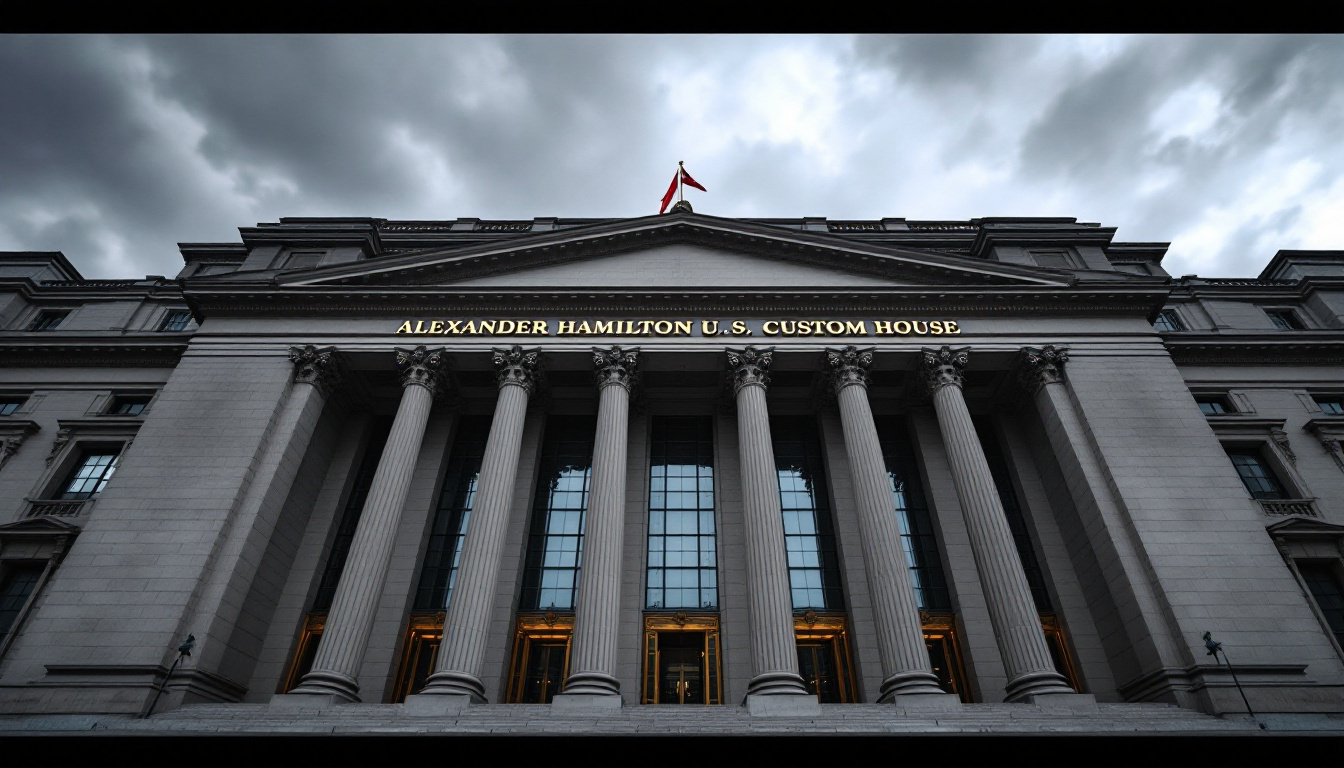
Inside the Alexander Hamilton U.S. Custom House in Manhattan, a federally funded museum exhibit labels George Washington — the man who built the country — a "town destroyer." The display sits in the National Museum of the American Indian's "Native New York" exhibit, where visitors learn that "American armies destroyed 40 Haudenosaunee (Iroquois) towns and burned their harvests."
No context about what prompted Washington's campaign. No mention of the raids that crippled the Continental Army first. Just the label.
A video display in the same exhibit discusses the death of Chief White Eyes, a Lenape chief who allied with the Americans, and presents his death as a definitive murder — while small text buried beneath acknowledges he was "probably" murdered. The historical record is contested. The exhibit isn't.
Another video tells visitors that "the American War for independence was such a disruptive and dangerous project." The Revolutionary War — the one that created the nation housing the museum — described like a reckless startup pitch that should've been killed in committee.
The online educational materials are worse. Colonists are framed as "trespassers and squatters." A separate display notes that life was peaceful "until the white men began their revolution." The National Park Service, which partners with the Smithsonian on interpretive materials, echoes the framing: "The American destruction of the Six Nations' homelands came as a result of the destructive raids" — referencing the 1778 frontier raids that targeted New York and Pennsylvania settlements, raids the exhibit conveniently skips past.
The museum gift shop stocks titles like An Indigenous Peoples' History of the United States, Stealing America: The Hidden Story of Indigenous Slavery in US History, and An Afro-Indigenous History of the United States. There's a children's picture book about Deb Haaland, President Biden's interior secretary. Books on "two spirit" gender identity sit on the shelves of a museum funded by the same taxpayers who elected the current president.
This isn't new territory for the institution. A 2010 New York Times cultural critic called the museum an "identity museum" that was "designed to affirm a particular group's claims," portraying "an impossibly peace-loving" world "through a gauze of romance." That was fifteen years ago. The gauze has thickened.
President Trump ordered a review of the Smithsonian earlier this year, and exhibits like this one explain why. A museum system receiving federal funding has one job when it comes to the founding: present the full picture. The raids of 1778 happened. Washington's Sullivan-Clinton Campaign was a response to them. Presenting the response without the provocation isn't education. It's prosecution.
The Smithsonian is supposed to be America's attic — the place where the nation keeps its story. Somewhere along the way, the curators decided the story needed a villain, and they picked the guy on the dollar bill.