A former senior CIA operations officer just went on the record with investigative journalist Catherine Herridge and said what half of Washington already knows but nobody with clearance will admit: there is a shadow government inside the U.S. intelligence community, it actively blocked President Trump's agenda during his first term, and it shielded the Chinese Communist Party while doing it.
His name is James Erdman III. And he's not guessing.
Erdman, who spent his career in CIA operations, told Herridge that entrenched intelligence officials systematically undermined the president they were supposed to serve. "There's certainly people who believe that they are the adults in the room," Erdman said. Then he got more specific: "I think that in effect, what you have are people who act as a shadow government, whether they know they're doing it or not."
Whether they know they're doing it or not. That's a polite way of saying some of them absolutely know.
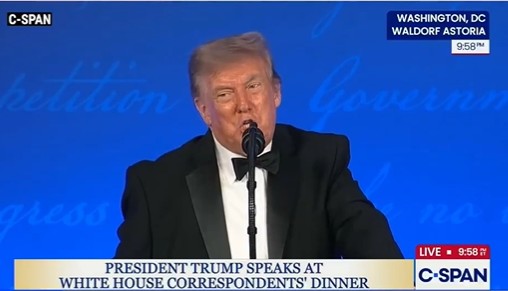
The interview lines up with what we've been watching unfold in real time. President Trump himself revealed that raw intelligence obtained by the FBI in 2020 — and buried by what he called "rogue bureaucrats" — showed that China's interference "even included an attempt to manufacture illegal ballots for Joe Biden." The FBI sat on it. The personal data of approximately 220 million American voters was reportedly accessed by the Chinese Communist Party, and the bureau's response was to bury the evidence and hope nobody noticed.
The FBI's own people weren't exactly subtle about it, either. One FBI official's internal message, surfaced during the investigation, read: "I am basically running a shadow government inside the FBI right now." Not a metaphor from a political opponent. Not spin from a cable news panel. An FBI official describing their own operation, in their own words.
Then there's retired General Mark Milley, the former Chairman of the Joint Chiefs of Staff, who reportedly called Chinese General Li Zuocheng behind President Trump's back and assured him that any military action wouldn't catch Beijing off guard. "It's not going to be a surprise," Milley allegedly told Li. The nation's top military officer freelancing foreign policy with an adversary's general — on his own authority, without presidential knowledge or approval.
Nikki Floris, who led the FBI's Foreign Interference Task Force, is another name that keeps surfacing in this story. The task force that was supposed to protect American elections from foreign meddling. The same task force that apparently decided the biggest foreign meddling operation in modern history wasn't worth flagging.
Erdman had pointed praise for exactly one person in the intelligence community's leadership: Director of National Intelligence Tulsi Gabbard. "I think she's the only one who actually conducted IC reform and did exactly what President Trump was asking her to do," Erdman said. One person. Out of the entire intelligence apparatus. That's not a compliment — it's an indictment of everyone else.
The usual defense from the intelligence establishment is that career professionals are simply following protocols and acting in the national interest. Which is an interesting way to describe burying evidence of foreign election interference, freelancing backchannel calls to adversary generals, and bragging about running a shadow government in internal communications. If that's protocol, the protocol is the problem.
What makes this different from the usual "deep state" conversation is the specificity. We're not talking about anonymous sources or vague suspicions. We have a named CIA veteran going on the record. We have an FBI official's own written admission. We have a four-star general's reported phone call to Beijing. We have 220 million voters' data compromised and an intelligence community that treated the cover-up as more important than the breach.
That's not protecting national security. That's picking a side.