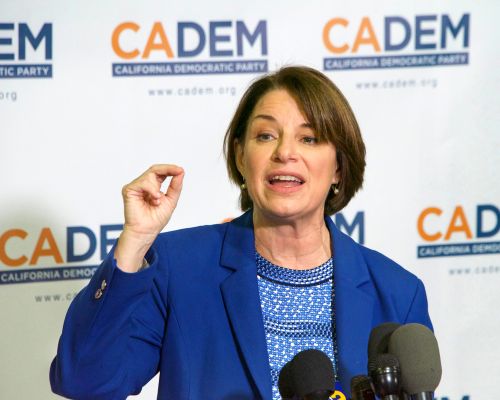
A woman stood at a Democrat press conference this week and said, with a straight face, "We need a path to citizenship for those of us that have been present at least seven years in this country." Not seven years of applying. Not seven years of waiting in line. Seven years of being here illegally.
That's the threshold now illegals are using to demand citizenship. Show up uninvited, stay long enough, and take the house.
There has been an explosion of full-blown entitlement mentality among people who crossed the border without permission and now believe America owes them citizenship for the accomplishment of staying hidden long enough. One case cited involves an individual who's been in the country illegally for nearly four decades — since 1989. The argument isn't "I made a mistake and I'm asking for mercy." The argument is "I've been here long enough that you owe me."
Those are two very different sentences. One is human. The other is a shakedown.
Hot Air's Beege Welborn put it simply: "It's so much easier to demand something you haven't earned, isn't it?" And that's the core of this. Earning versus demanding. The entire legal immigration system — the one millions of people actually use — is built on the premise that citizenship is earned through process, patience, and commitment.
Contrast the press conference demand with a legal immigrant from India who described arriving in this country with $80 in his father's pocket. "We waited, worked, and learned English. We assimilated," he said. He described American citizenship as "a sacred commitment to defend the Constitution, uphold the law, and give more than you take."
Give more than you take. That's what citizenship used to mean. That's what it still means to every person who does it the right way.
National Review's Dan McLaughlin raised the question nobody at that press conference wanted to hear: "If America is an idea, rather than a people, does that mean we should welcome into the country people who don't share the idea?" It's a fair question when the idea being presented is that presence equals entitlement.
The Federalist's John Daniel Davidson drove the point even further: "Being an American doesn't mean just being physically present in the United States. It means joining, and being adopted into, an existing people." Physical presence is geography. Citizenship is a covenant.
The open-borders crowd will frame this as compassion versus cruelty. But that framing requires you to ignore the millions of legal immigrants who filled out every form, passed every test, waited every year, and earned every right they now hold. Calling illegal presence a qualification for citizenship doesn't expand compassion — it punishes everyone who followed the rules.
Someone who's been here illegally since 1989 has had nearly four decades to apply through legal channels. Someone demanding citizenship after seven years of unauthorized residence isn't asking for fairness. They're asking to skip the line and be rewarded for it.
The man with $80 in his pocket built something. The woman at the podium wants something handed to her. One of those stories is the American Dream. The other is the reason people are losing faith in the system that's supposed to protect it.