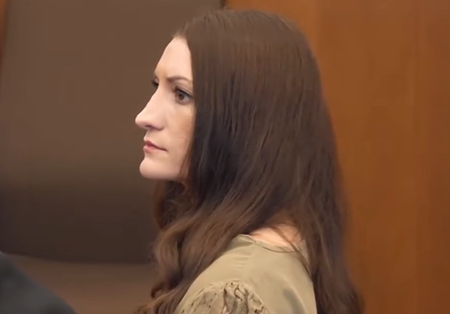
The lone holdout juror in the Lindsay Clancy trial — the mother charged with killing her three children — voted his conscience in an 11-1 split. He's a Haitian immigrant. Devoutly Catholic. And his family now cannot leave their house.
The tolerance crowd found a new target.
The juror who refused to acquit Clancy has been driven into hiding by a harassment campaign waged by true-crime fanatics and reporters who have besieged his home. His brother spoke to the media about what the family is enduring, defending the juror's decision plainly: "He looked at the case, and he made the call. For me, that's how I would do it."
That's it. A man sat in a jury box, listened to evidence in a case involving a mother accused of killing three children, and concluded he could not vote to acquit. Eleven jurors went the other way. The result was a hung jury. That is the system working exactly as designed — one juror with a reasonable doubt going the other direction is not a malfunction. It's the entire point of requiring unanimity.
But the progressive response wasn't to accept the outcome. It was to find the man, identify his home, and make his family prisoners in it. His brother noted the obvious: "His choice was good for some people, but not good for other people." The people it wasn't good for decided civic harassment was an appropriate response to a civic act.
The juror's background makes the mob's framing collapse before it starts. Social media users pointed out that the holdout is a "devoutly Catholic Haitian immigrant" — and that his faith had "nothing to do with refusing to acquit." The usual playbook — paint the dissenter as a right-wing ideologue, a culture warrior, a MAGA plant — doesn't attach to a Haitian immigrant who sat through a trial and voted based on what he heard. There's no political motive to assign. There's no talk-radio pipeline to blame. There's just a man who took the oath seriously.
So instead of a narrative, they went with raw intimidation. Reporters camped outside the home. True-crime communities turned their attention from the case to the juror. The family, per reports, cannot leave the house. The message to every future juror in a high-profile case is unmistakable: vote the way the internet wants, or we'll find you.
Jury intimidation used to be a crime we associated with organized crime families and cartel trials. Now it's a crowdsourced hobby for people who think justice means getting the verdict they predetermined before opening statements. The same political movement that spent years lecturing about "protecting democracy" and "institutional norms" has decided that one man's vote on a jury — the most direct form of democratic participation outside an election — is something to be punished.
The brother didn't ask for sympathy. He didn't make a political statement. He said his brother looked at the case and made the call. That used to be enough in this country.