The national average for a gallon of regular gasoline hit $4.07 this week. August 2026 is on track to become the most expensive August on record for American drivers. Crude is holding in the $80-per-barrel range, and the Strait of Hormuz situation isn't helping.
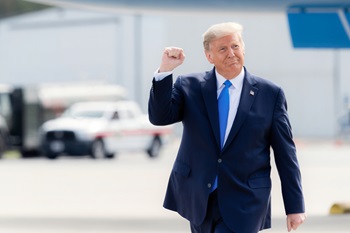
Then President Trump announced he just secured access to 65 billion barrels of Venezuelan oil at zero cost to the American taxpayer.
The deal gives the United States a 55% effective interest in the output of a new joint venture covering 17 strategic Venezuelan oil fields. That's roughly 35.75 billion barrels accessible to the U.S. through a combination of equity stake and rights to purchase oil at cost. The arrangement runs 25 years, with 100-year concessions granted to the private company managing the reserves.
Venezuela's interim President Delcy Rodriguez celebrated the agreement on state broadcaster VTV Saturday, calling it "a 25-year bilateral project" with "a production target of more than 1.5 million barrels per day." She noted potential revenue of over $200 billion for Venezuela over the deal's term.
Rubio didn't mince words on the scope. "This deal is a huge win for both the American and Venezuelan people," he posted on X. "It demonstrates how President Trump's bold foreign policy is driving America First wins: securing stable reserves and low-cost oil in our Hemisphere and lowering gas prices here at home. For the Venezuelan people, this deal will bring nearly $100 billion in private investment, support thousands of high-paying jobs, and drive the reconstruction of Venezuela's economy."
So the terms: America gets majority access to the oil. Venezuela gets billions in investment and an economy that actually functions. Nicolás Maduro — who was taken into U.S. custody back in January — gets to watch from the sideline while the country he wrecked starts rebuilding.
Trump followed up Sunday morning with a Truth Social post about the Strategic Petroleum Reserve: "One of the things I am going to do with the Venezuelan Oil is fill up the Strategic National Reserves which, because of Sleepy Joe Biden, has been virtually emptied. The 'topping out' process will begin very shortly, and is a Gift from Venezuela to the People of the United States."
Now, the critics have their talking points ready. Patrick De Haan, head of petroleum analysis at GasBuddy, pointed out Saturday that "it still will take billions of investment to get that oil." He also raised the question: "How can the U.S. lay claim to a sovereign country's natural resources?" Which is an interesting objection to raise about a deal negotiated with that country's sitting government, announced by both sides, and covering oil fields that Venezuela couldn't develop on its own because — as ExxonMobil CEO Darren Woods has noted — the country was considered "un-investable."
The infrastructure challenges are real. Venezuelan crude has what S&P Global described in 2021 as "the viscosity of asphalt" — it requires diluent blending before it can move through pipelines. Rystad Energy has noted that Venezuela needs "higher drilling activity, extensive workover campaigns, improved infrastructure and significantly greater rig availability." A 17% production increase by 2028 is the optimistic projection. Nobody's claiming this oil hits American gas stations next month.
But compare the math. Gas was $3.21 a gallon in August 2025. It's $4.07 now — an 88-cent increase, up 27% year over year. The Iran conflict jacked up global energy prices and squeezed supply chains. This deal doesn't fix that overnight. What it does is lock in long-term access to the largest proven reserves in the Western Hemisphere — Venezuela holds 303 billion barrels total, roughly 17% of global reserves — at a moment when every other option involves either writing enormous checks or trusting hostile governments.
The foreign policy establishment spent decades trying to "manage" Venezuela through sanctions and stern press releases while Maduro ran the country into the ground. Trump removed Maduro, installed a cooperative government, and negotiated majority access to the oil — all within his second term.
That's 65 billion barrels, $100 billion in private investment, a production target of 1.5 million barrels per day, and a 25-year agreement. No troops deployed. No taxpayer dollars spent. No UN committee consulted.
The gas prices will catch up. The deal already has.