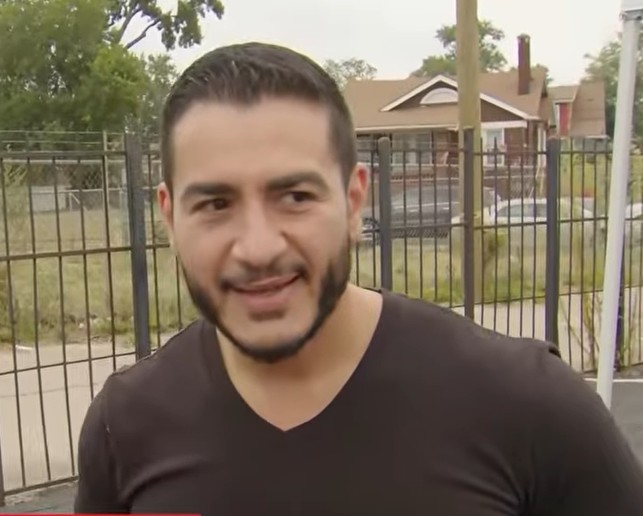
Abdul El-Sayed, the Democratic nominee for Michigan's U.S. Senate seat, stood in front of a group of black voters and said three words that even Rachel Dolezal might find a little cringeworthy: "I am African."
His father is from Egypt.
El-Sayed — full name Abdulrahman Mohamed El-Sayed — is an Egyptian-American physician who apparently decided that having a father from North Africa and having the lived experience of black Americans are close enough for campaign purposes. He told the audience, "I learned what it means to be a person of color reading black folk," which is one of those sentences that sounds enlightened until you think about it for more than four seconds.
He learned what it means to be a person of color from books. And then told actual people of color that he's one of them. Because geography.
The reaction online was about what you'd expect. "You sure about that, Abdul?" wrote one commenter. Another pointed out the rather significant historical detail that Arabs enslaved Africans well into the 20th century — a wrinkle that makes the "I am African" branding a bit more complicated than El-Sayed's campaign team probably workshopped.
But the identity acrobatics are only the appetizer. It was uncovered this week that El-Sayed's birth mother, Fatten Fathy Elkomy, worked from 1999 to 2004 at the Islamic American Relief Agency — better known as IARA. The U.S. Treasury designated IARA as a terrorism-supporting organization in 2004. The Bush DOJ hit IARA with a 33-count indictment in 2007. The organization was accused of illegally funneling approximately $1.4 million to Iraq, with transfer requests including $24,607.34 directed "to Iraq office" and another transaction of $20,772.88. Two IARA board members eventually pleaded guilty, and the organization dissolved in 2016.
Elkomy was never charged or named as a co-conspirator. She currently works in Missouri as a psychiatric nurse practitioner. But the connection between a Senate candidate's mother and a Treasury-designated terrorism-supporting organization is the kind of thing voters tend to find relevant — especially when the candidate is already performing identity contortions to win their trust.
El-Sayed's campaign also featured him comparing himself to Jesus Christ, suggesting that Christ was "considered a radical in his time too." Which is a bold move for any politician, but particularly bold for one whose primary campaign strategy appears to be telling each audience whatever he thinks they want to hear.
This is what happens when identity politics becomes the entire platform. The categories stop being about people and start being about positioning. African means whatever gets you the vote. Radical means whatever makes you sound brave. And the voters you're courting become props in a performance they never auditioned for.
Somewhere, Rachel Dolezal is watching this and wondering where her Senate campaign went wrong.